cost effective data enabled metal fragmentation oversight solutions?
Commencing
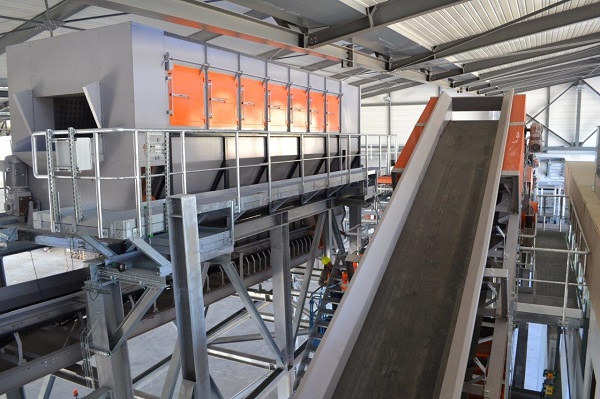
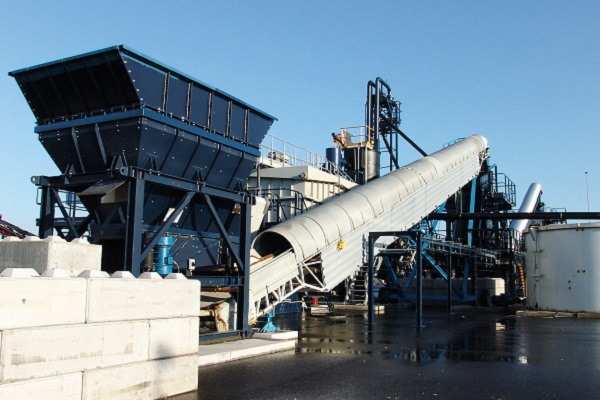
Leading-edge accelerated distinguishers yield a extraordinary technique for residue categorization. Specific state-of-the-art instruments leverage the law of momentum to separate various materials based on their physical specifications. By propelling debris at swift tempos, dynamic dividers can unerringly allocate recyclables from organic waste and adulterants, thereby refining the overall functionality of the recovery operation.
- Moreover, momentum-based partitioners can manage a expansive collection of scrap content, rendering them convertible for implementation in multiple factory-based and public environments.
- For that reason, the adoption of advanced propulsive classifiers can noticeably reduce the eco-damage of refuse management.
Boosting Substance Recovery: The Effectiveness of Ballistic Separation Innovation
In the ceaselessly advancing realm of residual recovery, refining resource reclaiming holds a fundamental mission. Momentum-based separators operate as leading systems, capitalizing on rotational acceleration to finely divide materials by density and shape. These mechanisms persistently secure prominent salvage yields for indispensable recyclable materials including thermoplastics, nonferrous metals, and clear minerals. Through automating the classification workflow, kinetic dividers lower workforce expenses, maximize operational productivity, and eventually support a greener refuse handling framework.
Metallic Reduction for Economic Recycling Strategies
Metal reduction processes are pivotal in enhancing recycling and waste transformation schemes. Such procedures engage durable implements to shred metal components into particles, promoting extended processing and fabrication of usable materials. This engineered system ensures distinct partitioning of metals, advancing creation of superior recycled metals for uses in construction, production, car making, and tech sectors. Hence, metallic reduction notably supports greener industry by cutting raw material usage and reducing harmful environmental consequences.
Dynamic Separation: A Vital Part of Current Waste Management
Across advanced recycling architectures, momentum-based separation acts as a fundamental process. The complex setup capitalizes on fundamental science to distinctly divide elements by scale, structure, and gravitational pull. By means of moderated gaseous streams or other vehicles, recyclable pieces are guided to particular holding bins, improving classification tasks. This practical sorting technique diminishes manual effort, elevating complete efficiency and production in current recycling structures.
High-Performance Debris Organizer Using Projectile Separation
Throughout the contemporary ecological context, the importance of proficient scrap sorting options is high. An innovative answer involves deploying top-tier sorting equipment harnessing kinetic classification technology. This practice uses blow energy to allocate heterogeneous rubbish parts by size, figure, and weightiness. These systems furnish quick and reliable refuse sorting, limiting dumping amounts and improving recycling campaigns
- Merits of using ballistic separation in waste sorting machines include:
- Improved performance rates
- Fine-tuned classification
- Trimmed employment charges
- Strengthened ecological impact
Automating Waste Management: The Power of Ballistic Separators
Refuse handling demands considerable effort for communities across the globe. In the past, scrap has been arranged by humans, a practice requiring extensive effort. Conversely, breakthrough systems are enhancing residue disposal. Of these, propulsive sorters have risen as effective innovations. Momentum-based separators exploit physical phenomena to hasten debris expeditiously, effectively partitioning by mass. The programmed technique significantly ameliorates waste sorting, curtailing labor efforts and planetary impact
- Merits of Ballistic Separators:
- Improved productivity
- Lessened labor charges ballistic separation
- Augmented separation precision
- Lowered ecological footprint
From Landfill to Resources: Shredding and Separating with Precision
Under conditions demanding ecological stewardship, recycling leftovers into useful items is necessary. Comminuting and grouping efforts are vital, promoting engagement of residual values in thrown-away articles. Employing thorough partitioning, sundry materials including PVC, iron composites, paper pulp are separated, supporting recovery and reconstitution. Such scrupulous procedures ease earth depletion and propel green systems recognizing debris as precious stock
Amplifying Recycling Rates: The Impact of Material Shredders
Forceful crushers fulfill essential positions in optimizing recovery ratios by compacting reusable items. This function promotes thorough differentiation and reprocessing, culminating in elevated recycled material output. Besides, comminuted materials require less capacity in storages, safeguarding essential reserves and enhancing distribution logistics
Smart Sorting Innovations
Projectile classifiers are enhancing the workflow of debris organization. These contemporary machines leverage fast impact energies to deliver mixed trash into definite repositories depending on weight and density. Such technological enhancement dramatically improves classification precision, resulting in higher renewal ratios and diminished dumping volumes
Powerful Metal Extraction with Top-Tier Shredders
Demand for ferrous elements perpetually expands, motivating superior processing methods. Powerful breakers are key by speedily crushing metal residues into lesser, easy-to-handle parts. Such procedure promotes successive transformation and recovery of worthy elements, controlling biosphere impact of metal development. Upgraded breaker units, with tough bodies and sharp edges, facilitate sectors to boost extraction output and diminish discard
The Recycling Revolution: Innovations in Waste Management
The anticipated future of reuse accelerates thanks to cutting-edge progress. These improvements transform trash handling with elevated effectiveness. From smart machines capable of distinguishing and grouping salvageable materials exactly to complex sensor grids observing trash metrics instantly, these methods open paths to eco-friendly futures
- Digitized sorting centers
- Green polymers
- Closed-loop economic systems
Through adopting these modern breakthroughs, we achieve efficient refuse control and build an eco-conscious tomorrow.